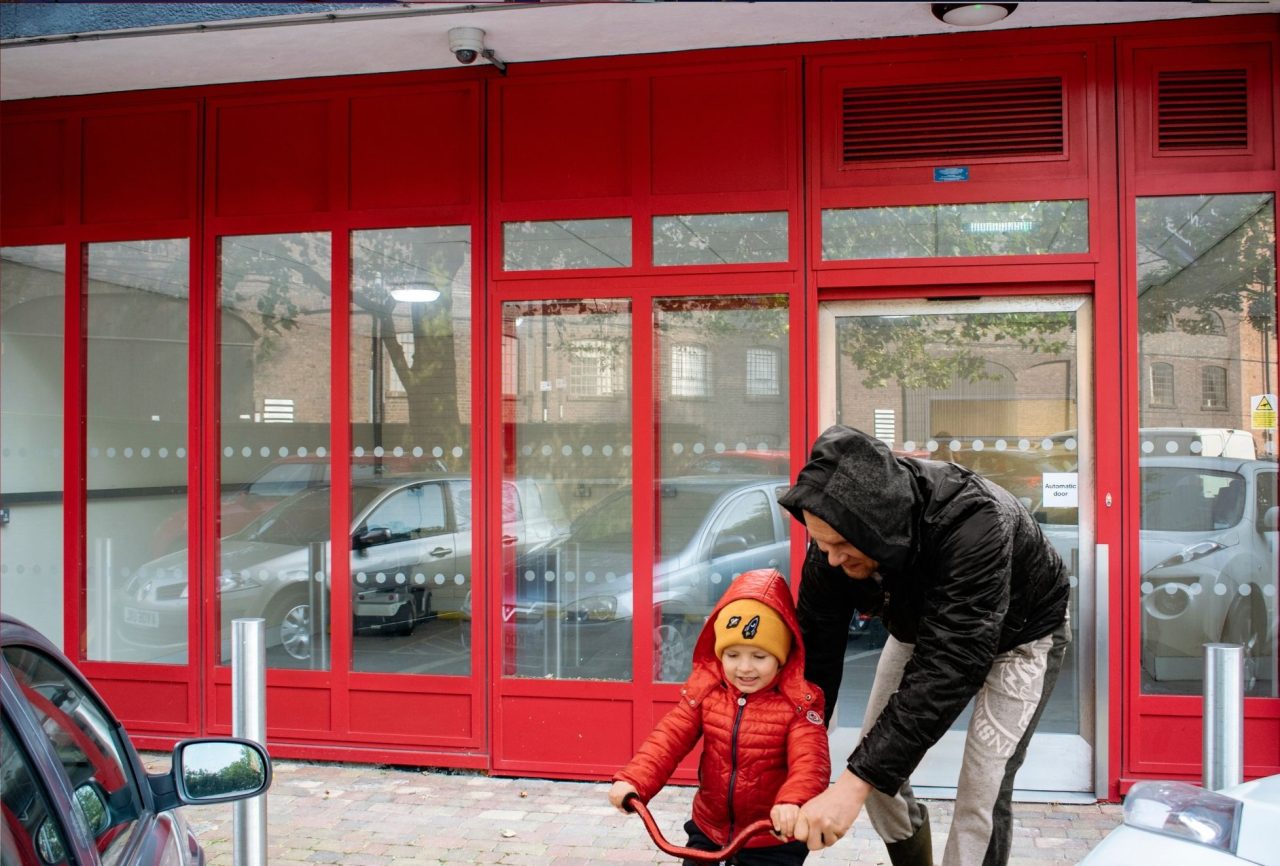
When councils approve new security doors for residential blocks, it is rarely about aesthetics. It is about control, safety and restoring confidence where antisocial behaviour has taken hold. Recent approval by Norwich City Council to install new communal security doors at several affordable housing blocks highlights a familiar issue across the UK. The buildings in question had no effective locking systems. Access was unrestricted. Residents raised concerns. The council responded.
On the surface, this is a straightforward planning story. In reality, it speaks to a wider challenge in public sector housing: how to ensure that communal entrance doors are not just installed — but engineered to last. For Warrior Doors, communal entrances are critical assets. When they fail, the impact is immediate. Antisocial behaviour increases. Maintenance calls rise. Residents feel exposed. Councils face pressure to act quickly — often twice.
Managing Director Brett Barratt believes the sector still underestimates the long-term financial consequences of getting communal entrances wrong. “Security doors in social housing shouldn’t be treated as short-term fixes,” he says. “They should be designed to last the life of the building. If you’re replacing them every five or ten years, that isn’t saving money — it’s storing up cost.”
Across the country, housing providers are learning that compliance alone does not guarantee durability. Many entrance systems meet certification requirements. Fewer are designed to cope with daily misuse, heavy footfall, vandalism and the cumulative wear that comes with real occupancy. When doors degrade prematurely, the cost multiplies. Emergency repairs, temporary security measures, disputes over warranties and full replacements all erode budgets already under strain. In some developments, doors less than a year old are being removed because they simply cannot withstand operational reality. This is where whole-life costing becomes more than a procurement phrase. It becomes a financial safeguard.
A well-designed stainless steel communal entrance door, manufactured and assembled under controlled conditions, with proven hardware systems and robust glazing, can remain operational for decades with predictable maintenance. That stability allows housing associations and councils to treat the installation as a capital asset — depreciated over its genuine service life — rather than a recurring operational expense.
“Once you view a communal entrance as infrastructure rather than a consumable, the conversation changes,” Barratt explains. “You can capitalise it properly. You can plan maintenance realistically. And you stop paying for the same mistake twice – that’s why we manufacture stainless steel security doors to SDB and LPCB certified standards – rather than standard mild steel – this includes the world’s first certified LPS 1175 SR3 Glazed Sliding Security Door.”
The Norwich approvals reflect a broader national trend: councils recognising that unmanaged access leads directly to antisocial behaviour and resident dissatisfaction. But installation is only the first step. The long-term outcome depends on whether the door survives real life. Communal entrances are not treated gently. They are pushed, forced, propped open and tested daily. Designing for ideal behaviour is optimistic; designing for expected behaviour is responsible. For local authorities balancing safety, compliance and fiscal scrutiny, the decision is not simply about adding a locking system. It is about investing in an asset that will deliver predictable performance over decades.
“Residents shouldn’t have to question whether their front entrance works,” Barratt says. “If it’s protecting people, it needs to be engineered to last. And its value should be recognised as such.” As councils like Norwich move to strengthen security across their housing stock, the lesson is clear: the true cost of a communal entrance door is not its purchase price. It is the cost of failure over time. Buy once, design properly, and treat it as the long-term asset it is.