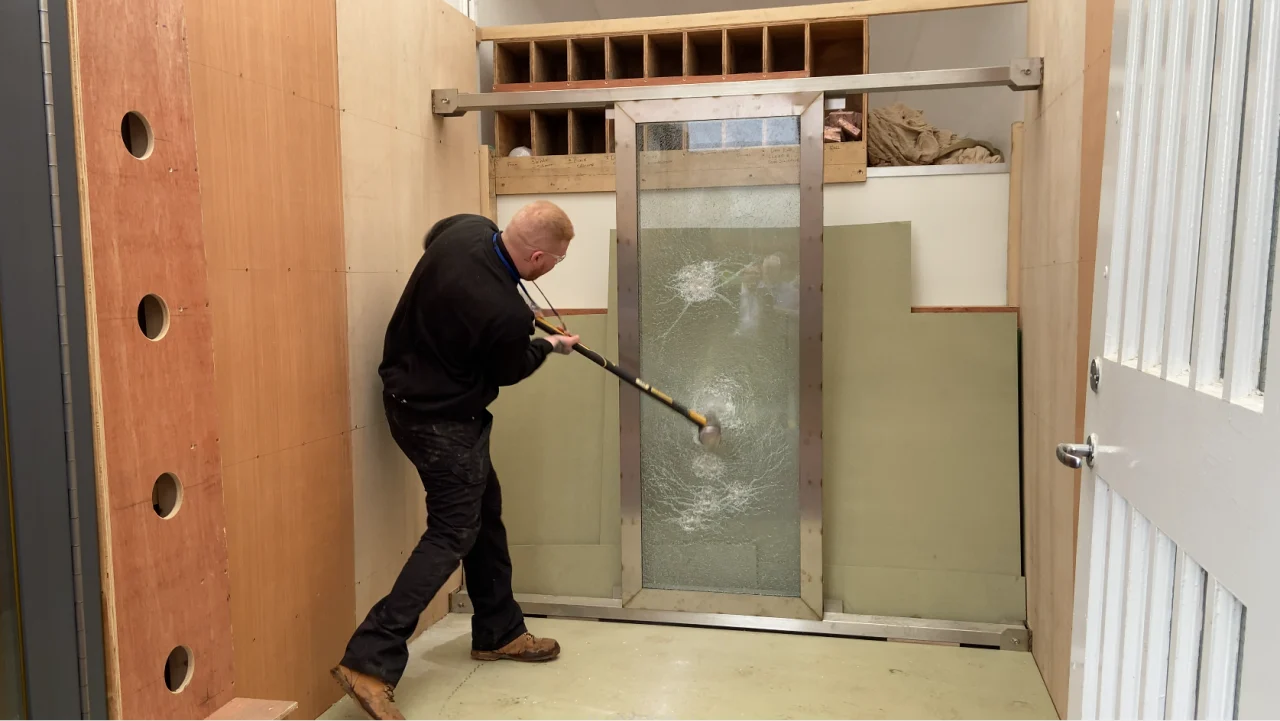
A sharp increase in ram raids and smash-and-grab attacks targeting jewellers is forcing retailers to reassess one of the most overlooked elements of store security: the shopfront itself.
Recent incidents across the UK — including a failed daylight ram raid in Bradford and overnight break-ins in Cambridgeshire — reflect what many in the sector say is a growing trend towards increasingly aggressive and organised attacks on high-value retail premises. For jewellers, where premium stock remains visible by design, the financial and operational risks are escalating rapidly.
According to industry body SaferGems, millions of pounds worth of jewellery has already been stolen in the opening months of 2026, with reports of armed robberies and vehicle-assisted break-ins rising sharply as soaring gold prices continue to increase the attractiveness of luxury goods to organised criminal groups.
For Brett Barratt, Managing Director of Warrior Doors, the pattern is exposing a critical weakness in many traditional retail environments.
“Criminals are becoming more tactical in the way they approach these attacks,” says Barratt. “They know exactly where the vulnerabilities are, and in many cases the weakest point is the physical frontage. Once access is gained, the entire security strategy effectively collapses.”
The issue is not necessarily a lack of alarms or surveillance technology, he argues, but the reliance on glazing and framing systems never designed to withstand deliberate vehicular assault or repeated high-impact attacks.
“Many jewellers operate from beautiful retail spaces, but aesthetically impressive doesn’t always mean structurally resilient,” Barratt explains. “Traditional aluminium systems and standard laminated glass simply aren’t engineered for the kind of force we’re now seeing used in coordinated ram raids.”
The latest incidents underline the speed and confidence with which offenders are operating. In Bradford earlier this month, three suspects used a vehicle to smash through the frontage of a jewellery store in broad daylight before fleeing the scene. While nothing was ultimately stolen, the attack caused major structural damage and forced the business to close temporarily.
For retailers, that disruption alone can carry significant commercial consequences.
“Even where stock loss is prevented, the cost to a business can be enormous,” says Barratt. “There’s the physical damage, the interruption to trading, insurance implications, reputational concerns and, importantly, the impact on staff who experience these incidents firsthand.”
In response, jewellers are increasingly investing in integrated physical security systems that combine attack-resistant glazing, reinforced framing and controlled entry systems designed specifically to delay forced access.
Warrior Doors, which specialises in high-security entrance systems for commercial environments, has seen growing demand from luxury retailers seeking protection without compromising the premium appearance of their stores.
“The challenge for jewellers has always been balancing visibility with security,” Barratt says. “You need transparency and openness to create the right customer experience, but you also need a structure capable of resisting a determined attack. The industry is now recognising that both can coexist.”
The company’s systems are designed around the principle of delaying entry long enough to deter offenders operating within narrow time windows — often measured in seconds rather than minutes.
“These attacks are highly time sensitive,” Barratt adds. “If criminals encounter resistance immediately, the risk profile changes very quickly for them. The longer you can maintain the integrity of the frontage, the greater the likelihood the attack fails altogether.”
Security specialists say the shift marks a broader change in how physical protection is being approached within the retail sector. Rather than relying solely on reactive measures such as CCTV or alarm response, businesses are increasingly focusing on engineered resilience — designing buildings and access points to withstand attack from the outset.
For jewellers facing rising insurance costs and increasingly sophisticated criminal tactics, that transition may become less of an option and more of a necessity.
“The reality is these are no longer opportunistic crimes,” says Barratt. “Many are planned, rehearsed and executed with precision. Retailers have to think differently about security now. It can’t be an afterthought added at the end of a project — it has to be built into the fabric of the environment itself.”