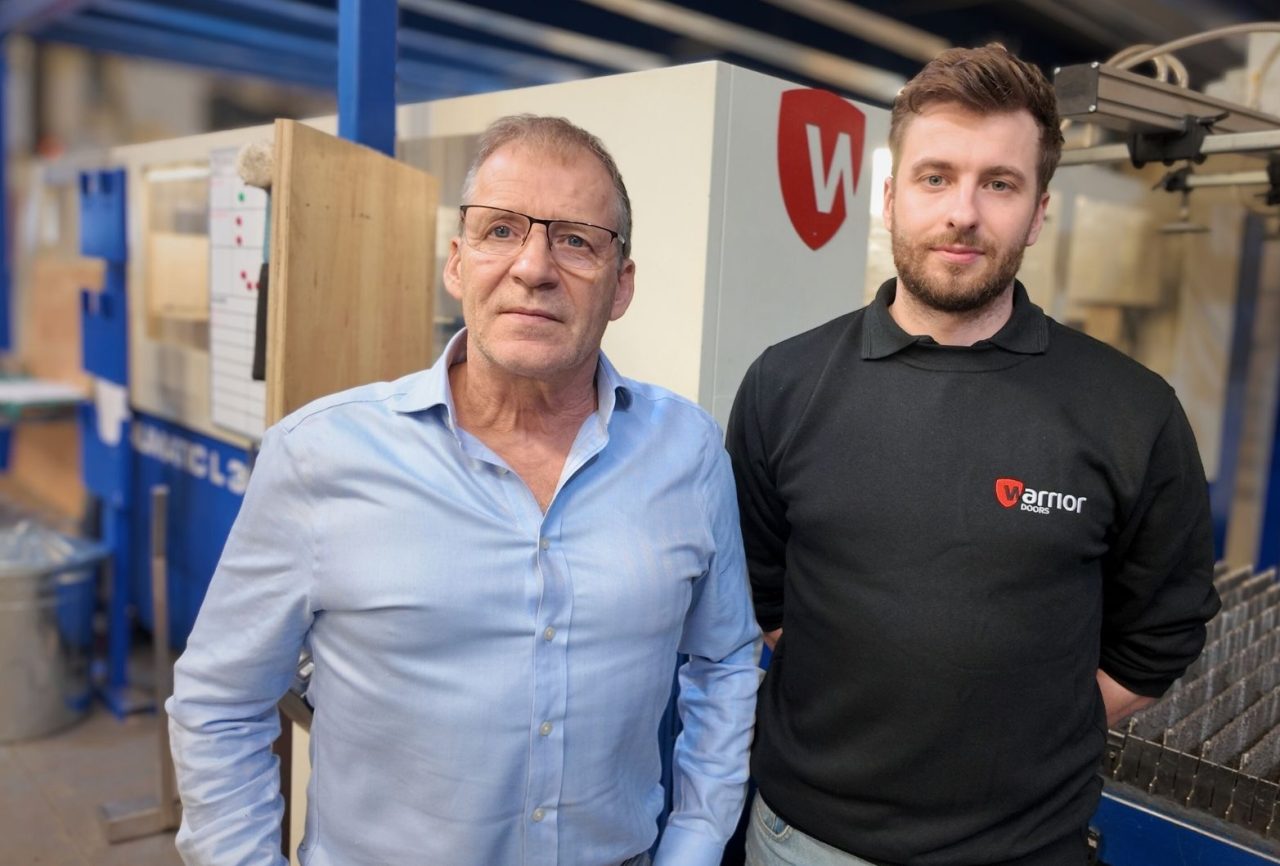
New research from Make UK and Bishop Fleming gives an indication of their scale. Around 65% of UK manufacturers are family-owned, rising to 82% in the Midlands. Together, family-owned manufacturers are estimated to contribute £94 billion to the UK economy and support around one million jobs. For Birmingham-based security door manufacturer Warrior Doors, those figures reflect a model of British manufacturing that Managing Director Brett Barratt knows well.
The company has built its business around designing, developing and manufacturing specialist security products in the UK, maintaining direct oversight of the process from engineering through to the finished product.
“Being a British manufacturer means we are close to everything we make,” said Barratt. “We know how the product has been designed, how it is being fabricated, how it is assembled and how it needs to perform when it reaches site. “For a family business, your name and reputation are closely connected to what leaves the factory. That creates a very strong culture around quality.”
Make UK’s research identifies long-term thinking as one of the characteristics of family manufacturing. Its report describes businesses supported by patient capital and a commitment to future generations, encouraging sustained investment in people, technology and productivity while retaining industrial capacity and skills in Britain. That approach has particular relevance for Warrior Doors because its products are expected to protect residential buildings, commercial premises and high-value environments for many years. The company therefore maintains its own manufacturing capability alongside the engineering expertise required to develop its proprietary security technology.
For Barratt, control of manufacturing and control of quality are closely related.
“You can walk from the office onto the factory floor and see the product being made,” he said. “Our engineers and manufacturing team can speak directly to each other. If we develop something new, the people making it are part of that process. “That gives us oversight from the initial idea right through to installation. For the type of security products we manufacture, that is extremely valuable.”
It also means knowledge gained from installations can return directly to the factory. A particular project may create a new engineering requirement. Experience on site can inform a design change. A new method of attack can lead to further product development and testing. Manufacturing remains part of that feedback loop rather than simply the final stage of production.
Britain’s manufacturing sector remains an important source of innovation. Make UK reports that manufacturing accounts for 48% of UK private-sector research and development expenditure. Warrior Doors’ own R&D is rooted in practical security engineering. The company develops products at its Birmingham operation before using independent testing and certification to demonstrate their performance. Over time, that work has produced proprietary security technology across communal entrances, security doors, sliding doors, display vaults and specialist applications.
“R&D doesn’t have to happen somewhere separate from manufacturing,” said Barratt. “Some of our development comes from standing around a product with the engineering and manufacturing teams and working out how we can make it perform better. “You manufacture it, test it, learn from it and develop it again. Having those capabilities together allows you to keep moving the product forward.”
That proximity also supports custom engineering. Security requirements vary considerably between a residential tower block, a luxury retailer and a specialist commercial building. An in-house manufacturing operation gives Warrior the ability to engineer around those circumstances while retaining control of the underlying security performance. The significance of manufacturing oversight becomes particularly apparent when the product is expected to perform a security function.
Materials, fabrication, welding, hardware, glazing, tolerances, assembly and installation all contribute to the performance of the finished entrance. The manufacturer therefore carries responsibility for considerably more than the appearance of the door. Barratt believes this is one of the enduring strengths of specialist UK manufacturers.
“We know the people making our products,” he said. “They understand what they are building and why particular details matter. There is accountability throughout the process because everything comes back to the same business. “When your product carries the Warrior name, you want to know exactly how it has been made.”
That approach also creates continuity of knowledge. Make UK found that almost half of family-owned manufacturers are led by second-generation executives, while nearly a third have reached the third generation. The report argues that effective succession helps preserve skills, specialist expertise and long-term decision-making. The principle extends beyond family members themselves. Experienced engineers and manufacturing employees pass practical knowledge to colleagues, while investment in machinery and product development creates new skills inside the business.
This network of specialist manufacturers also contributes to Britain’s sovereign industrial capability, because whilst sovereign capacity can sound like a concept reserved for defence, aerospace or major infrastructure, in practice, it also depends on retaining businesses capable of designing and manufacturing specialist products domestically. For Warrior Doors, that means Britain retains the skills required to develop and manufacture physical security products rather than simply sourcing finished systems from elsewhere.
“Sovereign capability starts with having people in this country who know how to make things,” said Barratt. “It is the engineering knowledge, the machinery, the manufacturing skills and the ability to take a problem and develop a product to solve it. Once you have built that capability, you have something worth protecting and continuing to invest in.”
Make UK’s research suggests family manufacturers form a substantial part of that industrial base. They combine economic scale with something harder to quantify: accumulated knowledge built through years of making products, solving engineering problems and developing skilled people. For Warrior Doors, family ownership, British manufacturing and product development have grown together.
“We are proud to manufacture in Birmingham because it gives us control over our products and responsibility for their quality,” Barratt added. “We can develop the technology here, manufacture it here and stand behind what we have made. “That is what British manufacturing means to us.”