Warrior Doors Managing Director Brett Barratt has called for local authorities and housing associations to rethink how they procure communal entrance doors, warning that an emphasis on the lowest initial price is leaving residents exposed to repeated security failures and taxpayers facing mounting repair and replacement costs.
Fresh concerns over security in social housing have emerged following reports of residents in an Islington housing block who say drug users and antisocial behaviour have left them feeling like prisoners in their own homes. According to MyLondon, a mother and daughter living in the block have described their distress at the situation and expressed frustration over the response to their concerns.
For Birmingham-based security door manufacturer Warrior Doors, the case reflects a wider issue affecting communal housing across the country, where the quality and durability of entrance security can have a direct bearing on residents’ everyday lives.
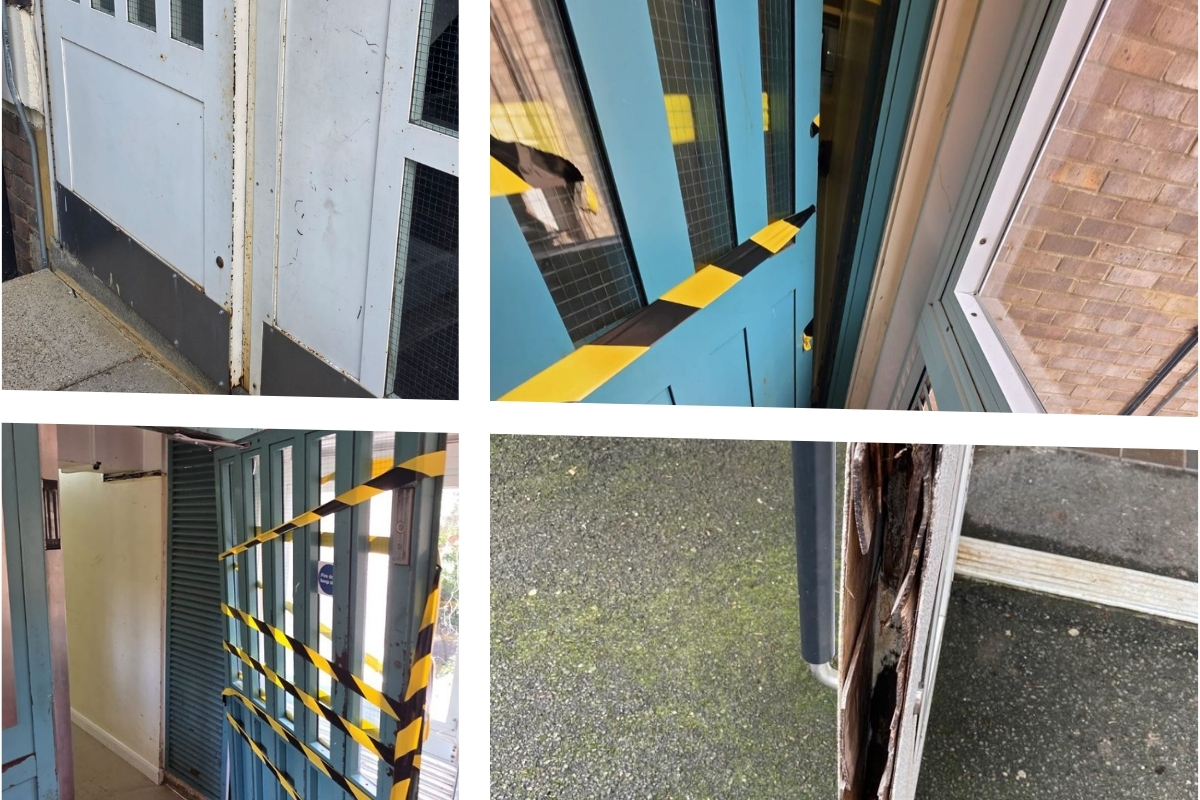
The company has assembled a series of photographs showing communal entrance doors in an appalling state of disrepair. Damaged frames, deteriorating fittings and heavily worn entrances illustrate the challenges facing housing providers responsible for maintaining secure access to residential buildings.
Managing Director Brett Barratt believes the condition of these entrances should prompt a serious examination of how replacement doors are specified and purchased.
“The cheapest bid is rarely the lowest cost,” said Barratt. “The purchase price is easy to see because it is sitting on a quotation. The difficult part is putting a value on everything that happens afterwards. “When a communal door fails, you have the cost of repairs, call-outs, replacement parts and potentially additional security measures. Meanwhile, residents are living with the consequences of an entrance that has become vulnerable.”
A procurement problem with long-term consequences
Warrior Doors has extensive experience manufacturing high-security communal entrance systems for housing providers, local authorities and other public-sector organisations. Barratt argues that procurement practices frequently place too much emphasis on the initial capital expenditure, with insufficient consideration given to how a door will perform over decades of intensive daily use.
Communal entrances face particularly demanding conditions. Hundreds of residents and visitors may pass through them each day, while repeated attempts at forced entry, vandalism and deliberate misuse place considerable pressure on hinges, locks, frames and access-control equipment.
A door that satisfies the requirements of a tender at installation can become an expensive liability if its construction proves inadequate for the environment.
“We are seeing doors being replaced that should have years of service left in them,” Barratt explained. “Some have deteriorated to a frankly appalling condition. When you see the photographs, you have to question how these products were specified and whether sufficient consideration was given to the conditions they would face.
“A communal entrance should be treated as a long-term asset. If you’re replacing doors every five or ten years, that isn’t saving money. It’s storing up cost.”
The financial implications extend well beyond the replacement door itself. Housing providers must account for repeated maintenance visits, emergency repairs, contractor management and the disruption caused when residents lose secure access to their building. In particularly serious cases, temporary guarding or additional security arrangements can generate substantial expenditure while a permanent solution is arranged.
Engineering doors for the life of the building
Warrior Doors believes the answer lies in a procurement approach that evaluates the whole-life cost of communal entrance security, including durability, maintenance requirements and resistance to sustained physical attack. The Birmingham manufacturer designs and manufactures its own proprietary security door systems, allowing it to engineer entrances around the particular demands of high-traffic residential environments.
Its approach places considerable emphasis on structural strength, robust hardware and long-term operational performance, supported by its in-house manufacturing capabilities. For Barratt, the distinction between initial purchase price and long-term value is central to the debate.
“The person making the buying decision and the person dealing with that entrance ten years later need to be part of the same conversation,” he said. “Local authorities and housing associations are managing substantial property portfolios, and the decisions they make today will affect their maintenance budgets for years to come. A properly engineered entrance represents an investment in the building and in the people living there.”
The Islington reports provide another reminder of the human consequences when residential security becomes compromised. For residents, a communal entrance is the principal boundary between their homes and the wider public. Barratt believes housing providers have an opportunity to improve both security and value for money by taking a longer-term view of replacement programmes.
“When you look at the condition of some of these communal doors, the case for change is obvious,” he concluded. “Residents deserve entrances that remain secure and dependable throughout their working lives. Public money should be invested in solutions that deliver that performance over the long term.
“We have the engineering capability in Britain to manufacture communal doors that are built to last. The procurement process needs to recognise the value of that.”