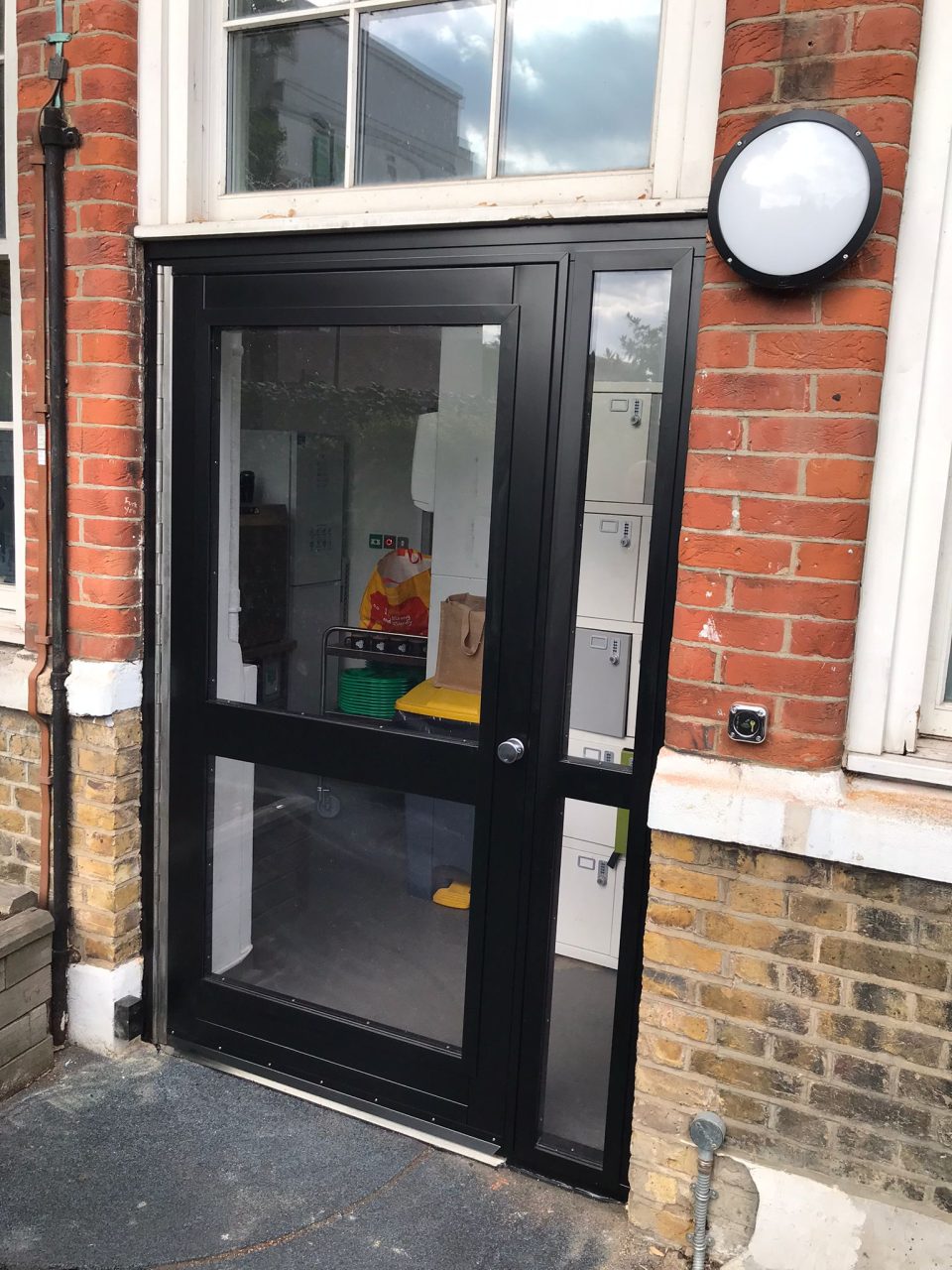
For many manufacturers, a door is a product. For Warrior Doors, it is engineered infrastructure designed to perform under sustained operational pressure in some of the UK’s most demanding environments. That distinction has become increasingly important within the specialist education sector, where schools supporting pupils with social, emotional and mental health (SEMH) needs are discovering that many conventional “security-rated” door systems are failing under real-world conditions.
One organisation confronting that challenge directly was Octavia Schools, a group of specialist SEN schools operating across multiple sites including Kennington, South Wood, Ferris, Great Baddow and Maidstone. Following repeated failures of traditional aluminium and glazed door systems, the group began a phased replacement programme with Birmingham-based manufacturer Warrior Doors.
The project has since become a case study in how British engineering, design-led manufacturing and operational understanding are reshaping expectations around entrance systems in high-dependency environments. According to Warrior Doors Managing Director Brett Barratt, the issue facing the sector is not necessarily compliance, but whether products are genuinely engineered for the environments in which they operate.
“Across construction and specification, there is still too much emphasis placed on compliance alone,” he explained.
“Many systems satisfy baseline standards, but those standards are often designed around controlled testing conditions rather than sustained operational misuse. In specialist education settings, doors are subjected to forces and behaviours that conventional systems were never engineered to withstand.”
Barratt says Warrior Doors approaches the category differently by treating doors not as standalone products, but as integrated engineered systems where structural integrity, hardware resilience and lifecycle performance are considered together from the outset. The company’s sliding security door systems are manufactured in the UK and designed using detailed 3D modelling and rendering technology before production begins. This allows Warrior Doors’ engineering team to simulate operational conditions, identify stress points and refine installation tolerances long before systems arrive on site.
“We invest heavily in front-end design because the installation phase should never be where problems are discovered,” Barratt said.
“Every component is considered as part of the overall operational environment — from sensor behaviour and structural reinforcement through to glazing retention, pivot integrity and maintenance accessibility. That level of detail is what separates engineered infrastructure from commodity products.”
The Octavia Schools programme required precisely that approach. According to Facilities Manager Paul Farrant, previous systems marketed as secure or durable had repeatedly failed within days or weeks of installation, creating safeguarding concerns alongside spiralling maintenance costs.
“Our experience with Warrior Doors has been superb from the outset,” he said. “We initially started at Kennington, then rolled out installations across South Wood, Ferris and Great Baddow, and we’re currently completing a replacement project in Maidstone. Before this, we were dealing with constant failures — particularly with internal doors where glass panels were being replaced almost daily.”
“The turning point came after a failed installation at Nine Elms, where newly fitted doors were kicked clean off their pivots within weeks. We were spending around £1,500 per door only to see them fail almost immediately. It became obvious these products simply weren’t fit for purpose.”
For Warrior Doors, projects of this nature rely as much on project management discipline as manufacturing capability. Each installation phase was carefully coordinated around operational school requirements, with manufacturing schedules, installation sequencing and commissioning milestones tightly controlled to minimise disruption to pupils and staff. Barratt explained that installation quality is viewed internally as an extension of the manufacturing process itself.
“You cannot separate manufacturing quality from installation quality,” he said.
“A well-engineered product can still fail if tolerances, alignment or environmental considerations are compromised on site. That’s why our project management process is extremely hands-on, from initial survey work and 3D design sign-off through to commissioning and aftercare.”
The systems installed at Octavia Schools were developed using engineering principles more commonly associated with custodial, healthcare and high-security environments, where failure points such as hinges, pivots and glazing systems must withstand repeated high-force misuse over extended periods. Since installation, Farrant says the operational improvement has been immediate.
“Brett and the team took the time to understand our environment and explain how their systems are engineered for exactly this kind of misuse,” he said. “Since introducing Warrior Doors, the difference has been clear. Once installed, they simply don’t fail — and crucially, we’re no longer calling engineers back out to fix ongoing issues.”
The broader significance of the project reflects a growing shift within UK construction and facilities management towards whole-life infrastructure thinking, particularly across education, healthcare and public-sector estates. Rather than focusing solely on upfront procurement cost or minimum compliance standards, clients are increasingly prioritising durability, maintainability and operational resilience. Barratt believes that shift will continue accelerating as organisations better understand the long-term operational cost of infrastructure failure.
“In environments supporting vulnerable people, failure has wider consequences,” he said. “When doors repeatedly fail, it affects safeguarding, operational continuity, staff wellbeing and the wider environment itself. Our role as a British manufacturer is to engineer systems that remove those risks and perform consistently over time.”
For Octavia Schools, that long-term thinking is already influencing future procurement decisions.
“Warrior Doors are now our preferred supplier,” Farrant added.
“We’re actively working through a programme to replace all remaining doors because we know we’re investing in something that will last. It’s about removing disruption. Our teams can now focus on delivering care and education, rather than constantly managing repairs.”
As UK manufacturers continue competing in an increasingly specification-led market, projects such as Octavia Schools demonstrate how engineering integrity, design detail and operational understanding are becoming critical differentiators.
For Warrior Doors, the company says that philosophy remains central to its growth.
“We are manufacturing operational infrastructure designed around real environments, real behaviour and real long-term performance. That requires engineering knowledge, manufacturing discipline and a willingness to exceed minimum standards rather than simply comply with them.” Barratt concludes.